By our Reporter
The ancient community of Oji River in Enugu State, South-East Nigeria, is home to one of the region’s most secretive and enduring traditions, the hereditary chief priesthood.
Our investigations reveal that this traditional office is not merely symbolic, but one enforced with rigid cultural demands that place members of certain families in danger if they refuse to accept the mantle.
According to findings by our reporter, the chieftaincy priesthood is not an elective office but one inherited strictly along family bloodlines. A source within the community, who craved anonymity due to fear of reprisal, explained that once a reigning chief priest passes on, the next in line must come from his direct lineage.
“It is not negotiable. The gods do not wait for democracy. If the appointed person refuses, consequences follow, sometimes violent,” the source said.
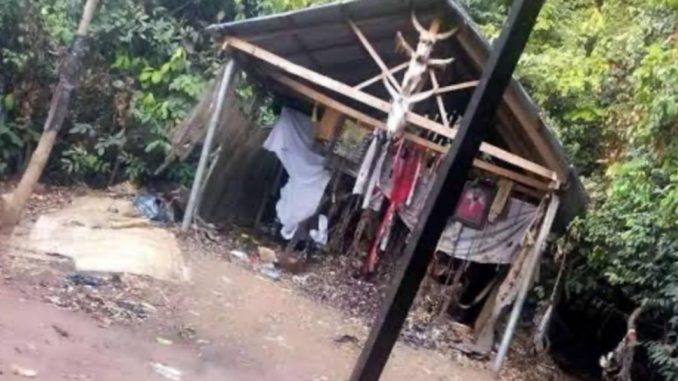
Traditionally, the role of the chief priest goes beyond presiding over shrines. It involves ritual sacrifices, spiritual consultations for kings and politicians, and custodianship of practices that have lasted centuries.
Another source familiar with the rites explained that politicians and influential figures often seek the chief priest’s intervention for “power, protection, and legitimacy” during elections or governance. This connection makes the office not only religious but also political, with a network of protection from powerful quarters.
Our findings further revealed that the lineage of the priesthood in Oji River has been tied for generations to a particular family, whose late patriarch served as the custodian of the shrine until his recent passing.
Community insiders confirmed that the mantle was expected to fall on his son, who, according to reports, is a Christian and had openly refused to perform the rites. “Once a man rejects, the bloodline does not end. His first son or child is the next option. That is the custom,” the anonymous source emphasized.
The refusal to accept the position, however, is not taken lightly. Multiple sources disclosed that sanctions could include forced initiation, banishment, or even death, depending on the gravity of the perceived defiance.
The enforcement of this tradition is allegedly backed by strong connections to local and national authorities. Our investigation revealed claims that traditional custodians maintain links with politicians, security agencies, and other state actors who often patronize the shrines for influence. This makes external intervention difficult for families trying to resist the role.
Ritual practices remain central to the office. Accounts from residents point to sacrifices, oath-taking, and other rites that continue in spite of modern religious opposition.
“Even in this 21st century, these rituals are very active. People who defy them face consequences,” one informant told our correspondent.
The investigation also confirmed that women and children are not exempt. In rare instances where a male heir is unavailable or inaccessible, female children of the bloodline could be drawn into the priesthood as priestesses, nurtured from childhood until they are old enough to assume responsibilities. This aspect has raised growing fears among some families about the long-term implications for their children.
Analysts say that while Christianity and urbanization have challenged many traditional practices in Igbo land, the priesthood of Oji River remains one of the most resilient, protected by secrecy, spiritual fear, and political backing.
Families caught in its web often find it difficult to escape, as relocation to another state or formal petitions to government institutions are seen as ineffective against the powerful interests tied to the tradition.
Our newsroom could not independently verify all claims regarding political and security involvement. However, the consistent testimonies gathered from multiple sources in Oji River suggest a widespread fear of defying the chief priesthood lineage.
The story of this tradition, passed down from generation to generation, highlights the collision between cultural practices and modern human rights concerns. For families directly affected, it is not merely about culture, it is a matter of life, safety, and freedom.
All efforts to speak with King Ezekweshiri proved abortive, as our reporter was denied access to the palace.

Tax and regulatory service