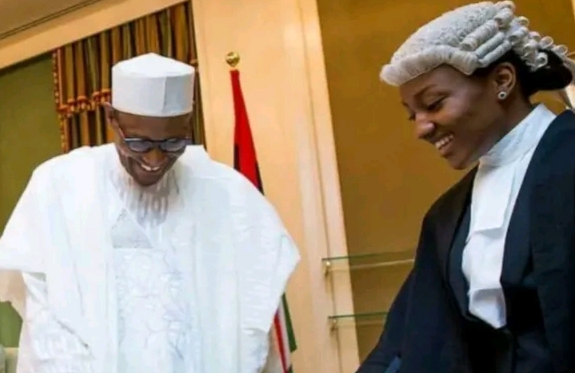
Halima Buhari, daughter of former President, Muhammadu Buhari, has shared a glimpse into the private moments of her late father, saying that he was aware of the criticism levelled against him and heard the voice of those who felt disappointed with his administration.
According to the Nigerian Tribune, she disclosed this on Wednesday, December 17 during the presentation of the book authored by former Minister of Information, Alhaji Lai Mohammed.
Halima revealed that the former President was aware that Nigerians, who nursed great hope and believed in Buhari’s capacity to restore sanity in all sectors of Nigerians’ lives, particularly the insecurity and bad shape of the economy, were disappointed by his performance.
She recalled the encumbrance her late father encountered.
“Behind every soundbite, there was a human being; sometimes tired, sometimes determined, sometimes frustrated, always painfully aware that his decisions impacted millions of lives,” she said.
“That human being was our Click here to continue reading

Leave a Reply