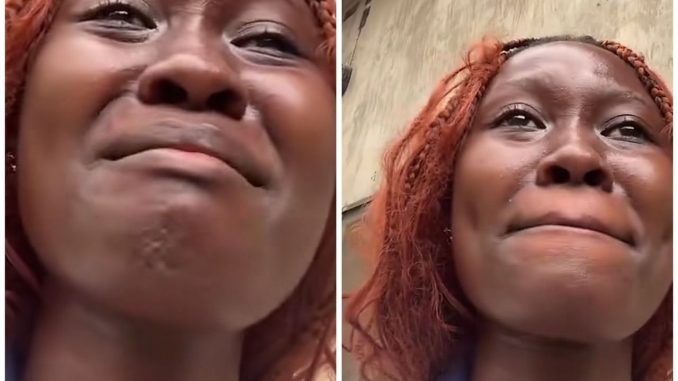
Nigerians woke up on Monday to a viral video posted by TikToker Abigail Nsuka, popularly known as Mirabel, alleging that she had been raped in her apartment in the early hours of Sunday, February 15.
In the emotional video, Mirabel claimed that an unknown assailant forced his way into her home around 9am after she had struggled through the night with insomnia. Amid sobs, she narrated that she had consumed alcohol in a bid to fall asleep and eventually drifted off around 6am.
According to her account, she heard a knock on her door hours later and assumed it was a neighbour. She alleged that immediately she opened the door, she was pushed back, hit her head on a refrigerator and lost consciousness.
“When I opened my eyes, there was a man over me. There was a cloth tucked in my mouth, and I was tied,” she said in the now-viral clip, adding that she tried to mumble for help but believed her neighbours had gone to church.
Advertisement
She further claimed that the attacker inserted a blade into her private parts to make her bleed, alleging that she initially thought she was menstruating before receiving a message from the supposed assailant.
The graphic details triggered outrage across social media platforms, with thousands demanding justice. Popular singer Simi and other public figures amplified her video, while advocacy groups signalled readiness to take up her case. The Lagos State Domestic and Sexual Violence Agency and the Ogun State Government also indicated interest in ensuring justice was served.
As sympathy poured in, Mirabel shared her bank account details online. Social media influencer Martins Otse, popularly known as Very Dark Man, disclosed that he transferred N100,000 to her account, explaining that he initially attempted to send N500,000 but was unable to complete the transaction due to bank restrictions.
A friend identified as Ifedolapo confirmed that additional donations of N200,000, N100,000 and N300,000 were received. Several other social media users said they contributed varying amounts. Another influencer, known as Immunizer, alleged that Mirabel may have raised between N1m and N5m from sympathisers within a short period.
However, as the video surpassed seven million views and continued to trend, some netizens began to question inconsistencies in her narrative. Critics analysed the messages she claimed to have received from the alleged rapist and pointed out similarities in writing style to her own posts. A neighbour reportedly dismissed her claim of attempting suicide by ingesting a poisonous substance, saying no such incident occurred in the building. A YouTuber also alleged that the story had been fabricated to raise money to renew her rent.
As scrutiny intensified, some of her friends publicly distanced themselves from the situation, denying any involvement in a scheme. In a recorded audio conversation that later surfaced online, Mirabel admitted that she fabricated the rape allegation. In the clip, she confessed to creating a separate TikTok account to send herself messages to make it appear as though the supposed attacker had contacted her. She reportedly suggested that her claims may have stemmed from personal struggles, acknowledging that the story was not true.
The admission stunned many supporters who had donated money and amplified her claims. Public sympathy quickly turned to anger, with several donors demanding refunds. Many Nigerians expressed concern about the broader implications of false rape allegations, noting that such actions could undermine the credibility of genuine victims of sexual violence and discourage them from coming forward.
The Founder and Executive Director of Project Alert on Violence Against Women, Josephine Effah-Chukwuma, condemned the incident and called for prosecution, warning that false allegations damage years of advocacy work aimed at supporting survivors. The Coordinator of the Lagos State Domestic Violence Response Team, Lola Adeniyi, cautioned that misinformation erodes public trust and complicates efforts to secure justice for genuine victims, while also warning against creating an atmosphere that silences real survivors.
Legal experts noted that Mirabel could face prosecution for giving false information. Section 59 of the Criminal Code Act and Section 24 of the Cybercrimes (Prohibition, Prevention, etc.) Act 2015 prescribes penalties of up to three years’ imprisonment, a fine of up to N7m, or both, for knowingly spreading false information online that causes public disturbance or anxiety.
Human rights lawyer Inibehe Effiong stated that individuals who make false rape accusations should face the full weight of the law, arguing that such actions discourage genuine victims and distort public perception of sexual violence cases. Similarly, Omenazu Jackson, Chancellor of the International Society for Social Justice and Human Rights, described the act as both a criminal offence and a social wrongdoing, emphasising the need for accountability to deter similar incidents.
The spokesperson for the Ogun State Police Command, Oluseyi Babaseyi, confirmed that Mirabel had been discharged from the hospital and is currently in police custody. He declined to state whether she would be formally charged.
What began as a viral cry for justice has since evolved into a cautionary tale about misinformation, social media influence and the far-reaching consequences of false allegations in an era of instant digital amplification.
(NAN)

Leave a Reply